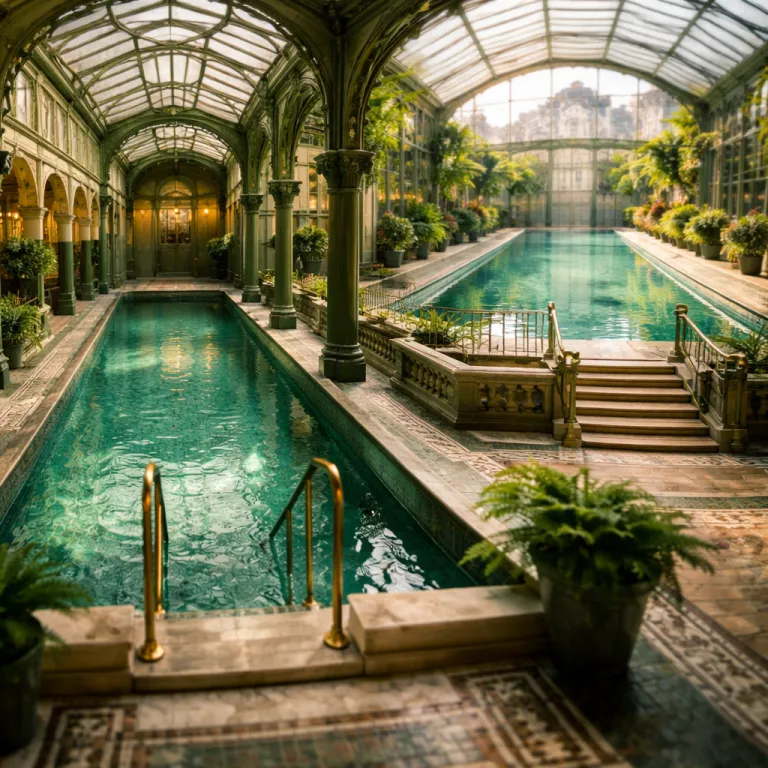
Why indoor pool hotels in London finally matter for serious swimmers
Indoor pool hotels in London used to feel like an afterthought, tucked into basements with low ceilings and lukewarm water. Today a new generation of hotels in London treats the swimming pool as the heart of the stay, with design, natural light and wellness programmes built around the water. For solo travelers who plan their trips around a good indoor pool, this shift turns a short city break into a ritual of laps, steam and quiet recovery between museum visits and late night walks along the Thames.
Six Senses London is the clearest signal that the city has changed its priorities, with a spa of roughly 25,000 square feet and a magnesium-rich indoor pool that feels closer to a contemporary bathhouse than a hotel amenity. The brand describes this as one of the first magnesium pools of its kind in a London hotel, although exact “first” claims vary between operators and should be treated as marketing rather than a verified record. The water is softly lit, the temperature is calibrated for real swimming rather than a quick splash, and the surrounding steam rooms and saunas are designed as a sequence, not a checklist. When you move from the magnesium swimming pool to a contemplation lounge and then into one of the sauna cabins, you understand why indoor pool hotels in London are finally competing with the great spa cities of Europe.
Space in central London is expensive, and for decades that meant small underground pools hidden below grand lobbies in Mayfair, Knightsbridge or Marylebone. Planning rules and heritage façades around Hyde Park, Covent Garden and London Bridge limited what architects could carve out above ground, so most hotels in London built compact basements with a short indoor pool and a token sauna. Industry listings suggest that many central hotel pools cluster around 15 metres in length, although figures vary by source and should be read as indicative rather than definitive, and serious swimming rarely felt compatible with a weekend near Big Ben or the London Eye.
Six Senses London and the new bathhouse mindset
Six Senses London takes its cues from the Victorian bathhouse tradition, but updates it for travelers who track sleep data and book cryotherapy between meetings at King's Cross. The magnesium indoor pool sits at the centre of a layered spa, where steam rooms, dry saunas and a generous contemplation lounge are arranged almost like a contemporary hammam circuit. You swim slow lengths under soft light, then step through to a lounge where herbal infusions replace the old bathhouse tobacco haze, and the only sound is water moving against stone.
This is where indoor pool hotels in London start to feel like destinations in themselves, not just places to sleep between visits to the Tower of London or St Paul's Cathedral. Solo guests can book early morning slots, often before 7 a.m., when the lap lane belongs to them alone and the only company is the faint rumble of the city waking up above Covent Garden and London Bridge traffic. For travelers who care about availability of quiet time more than pillow menus, that early access is as valuable as any upgrade on rooms or suites.
Hidden within the complex you will often find a smaller swimming pool for hydrotherapy, a hotter pool for contrast bathing and a series of steam rooms calibrated to different temperatures. The design language nods to London’s historic public baths near Hyde Park and Marylebone, but the materials are warmer and more natural, with stone, timber and soft textiles replacing Victorian iron. If you want to plan a wider European itinerary around serious water time, guides such as indoor pools to book before the summer crowds arrive help you benchmark Six Senses against other spa focused properties.
From basement rectangles to skyline lanes: how London pools evolved
The story of indoor pool hotels in London starts in the Victorian era, when public bathhouses offered clean water and social ritual to crowded neighbourhoods. Early hotel pools followed that template with functional rectangles, and many of those basements still sit beneath grand addresses in Mayfair, Knightsbridge and Marylebone. Over time, as land values rose around Hyde Park and London Bridge, architects had to work harder to integrate a proper indoor pool without sacrificing too many revenue generating rooms.
Modern properties such as Bvlgari Hotel London and Mandarin Oriental Hyde Park show how the best hotels in London now treat the swimming pool as a signature space rather than a hidden extra. Bvlgari’s colonnaded indoor pool sits within a spa of around 22,000 square feet, according to brand materials, while Mandarin Oriental Hyde Park offers a 17 metre heated pool that feels purpose built for laps before breakfast. Corinthia London, close to Trafalgar Square and a short walk from the London Eye and Big Ben, adds a dramatic indoor pool to a spa that anchors the entire property, illustrating that central London can still make room for serious swimming.
Rooftop solutions emerged as the next chapter, with The Berkeley Hotel and The Ned London both placing a swimming pool above the city rather than below it. The Berkeley’s heated rooftop pool offers views across Hyde Park and towards Knightsbridge, while The Ned’s rooftop pool frames St Paul's Cathedral in a way that makes every length feel cinematic. For a wider context on how these London pools compare with other European capitals, resources such as the best indoor pool hotels in Europe show that London has moved from lagging behind to setting a new urban standard.
Hidden gems: where solo travelers actually get the pool to themselves
Not every indoor pool hotel in London is a headline grabbing spa, and many of the most satisfying swims happen in quieter properties that rarely trend on social media. One Aldwych, for example, hides an 18 metre chlorine free lap pool with an underwater sound system beneath its Covent Garden address, and early morning sessions here feel almost private. The London Marriott Hotel County Hall, just across from the London Eye and close to Westminster Bridge, offers a 25 metre indoor pool that is among the largest in central London, yet off peak hours can be surprisingly calm.
Pan Pacific London, near Liverpool Street and within easy reach of Shoreditch and Tower Bridge, offers an 18.5 metre heated infinity pool that feels like a serene counterpoint to the financial district outside. The water line meets the skyline, and when you swim at dawn you see the first light catch the Tower of London and the cranes beyond London Bridge. Shangri La The Shard, London, meanwhile, hosts one of the highest indoor hotel pools in Western Europe on level 52; several hotel rankings describe it this way, although exact “highest” status can change as new projects open, so treat the claim as indicative rather than definitive.
For solo travelers, the real luxury is not just the design of the swimming pool but the availability of quiet windows when the space feels like a private club. That is where a careful reading of pool hours, family times and spa access rules matters more than the number of stars on the façade. Many central London hotels, for instance, schedule adult only swim slots either early in the morning or after 8 or 9 p.m., and some require advance reservations for peak weekend hours. If you want a curated shortlist of properties where rooms, spa access and indoor pool quality align, specialist resources such as refined city indoor pool stays can be more useful than broad hotel comparison sites.
How to choose the right London pool hotel for your itinerary
Choosing between indoor pool hotels in London starts with geography, because your relationship to the city will shape how you use the water. If you plan to spend mornings in museums and afternoons walking Hyde Park or Covent Garden, staying near Knightsbridge, Mayfair or Marylebone keeps both culture and spa within easy reach. Travelers focused on nightlife and food might prefer Shoreditch or London Bridge, where newer hotels in London often pair a compact indoor pool with a strong bar and restaurant scene.
Transport links matter, especially for solo guests arriving via King's Cross or leaving early for flights, so check how many minutes it takes to reach your hotel from the station. Properties near London Bridge, Tower Bridge or the South Bank make it easy to combine a pre train swim with a last walk past Big Ben and the London Eye. When comparing options, look beyond headline photos and study the pool length, depth, presence of steam rooms or saunas, and whether the sauna is mixed gender or separated into individual sauna spaces.
Wellness focused travelers should pay attention to how the spa integrates natural materials, light and air, because these details shape how restorative the space feels after a long day in London. A contemplation lounge with daylight and quiet seating can be as important as the swimming pool itself, especially if you use the spa as a place to read or reset between meetings. Always confirm availability of lap lanes, adult only hours and any need to pre book pool slots, because London’s most desirable indoor pools can be as busy as its restaurants on a Saturday night. Checking the hotel’s own website or calling the spa desk directly usually gives more accurate information than third party listings.
Design, atmosphere and the Victorian bathhouse revival
The most interesting indoor pool hotels in London are those that reference the city’s own water heritage rather than importing a generic spa aesthetic. Victorian bathhouses once dotted neighbourhoods from Marylebone to Shoreditch, offering steam, swimming and social life to residents who lacked private bathrooms. Today’s designers borrow that sense of ritual, pairing a central swimming pool with steam rooms, saunas and a contemplation lounge that encourage guests to linger rather than rush back to their rooms.
In some properties near Hyde Park or Knightsbridge, you will notice subtle nods to historic tiles, arches and colonnades, reinterpreted in stone and warm metals. Others, especially around London Bridge and Tower Bridge, lean into a more industrial language that reflects the warehouses and rail lines near King's Cross and the river. What unites the best of them is a focus on natural light, acoustics and water quality, so that the indoor pool feels like a sanctuary even when the city outside is at full volume.
Rooftop pools such as those at The Berkeley Hotel and The Ned London extend this narrative vertically, turning the skyline itself into part of the spa experience. When you swim with views towards St Paul's Cathedral, the Tower of London or the slow turning London Eye, you feel connected to the city’s landmarks in a way no ground level lounge can match. As one industry overview notes, “Increased demand for rooftop pools, emphasis on wellness amenities, and design integration with city views” now define the direction of London’s most ambitious hotel projects.
Key figures shaping London’s hotel pool landscape
- Hotel industry reports and brand fact sheets indicate that there are several dozen hotels with some form of swimming pool in London, a relatively modest number compared with the city’s total room inventory but significant for travelers who prioritise water access.
- Many central hotel pools measure in the mid teens for length, often around 15 metres, which means serious lap swimmers should pay close attention to dimensions when booking if they want more than a short plunge between steam and sauna sessions.
- Properties such as London Marriott Hotel County Hall, with its 25 metre indoor pool, and Pan Pacific London, with an 18.5 metre infinity pool, sit well above this typical range and are better suited to guests who plan structured swimming workouts.
- Large scale spa complexes like those at Bvlgari Hotel London and Six Senses London occupy more than 20,000 square feet, according to brand communications, underlining how much space high end properties now dedicate to wellness compared with earlier generations of London hotels.
- Rooftop pools at The Berkeley Hotel and The Ned London illustrate a broader trend towards elevated water spaces, responding to both the scarcity of basement space in historic buildings and the growing demand for pools with direct views of landmarks such as Hyde Park and St Paul's Cathedral.
FAQ about indoor pool hotels in London
Which London hotels have notable indoor pools for serious swimming ?
Several indoor pool hotels in London stand out for guests who value proper lap swimming rather than decorative water features. Bvlgari Hotel London, Mandarin Oriental Hyde Park, Corinthia London, Pan Pacific London, London Marriott Hotel County Hall and One Aldwych all offer well designed pools with enough length for structured sessions. Shangri La The Shard, London adds a dramatic high level pool, while Six Senses London sets a strong benchmark with its magnesium pool and extensive spa circuit.
Are there rooftop swimming pools in London hotels ?
Yes, a small but growing number of hotels in London offer rooftop pools that complement the city’s indoor pool scene. The Berkeley Hotel features a heated rooftop swimming pool with views towards Hyde Park, while The Ned London offers a rooftop pool that frames St Paul's Cathedral and the surrounding skyline. These elevated pools are particularly appealing in warmer months, but many are heated year round and can be combined with indoor spa facilities on lower levels.
Do London hotel pools have age restrictions or limited access times ?
Policies vary widely between hotels in London, so it is essential to check access rules before booking if the pool is a priority. Some properties reserve certain hours for adults only, while others set family swim times or require advance reservations for the indoor pool during busy periods. High demand pools, especially those near major sights such as the London Eye, Big Ben or Tower Bridge, may also limit access to guests with specific room categories or spa packages.
How can solo travelers avoid crowded pools in central London ?
Solo guests who want quiet water time should look for hotels that offer early morning or late evening access to the swimming pool, ideally before 7 a.m. or after 9 p.m. Choosing properties slightly away from the busiest tourist zones, such as those in Marylebone, Shoreditch or near King's Cross, can also reduce crowding compared with hotels directly beside Covent Garden or London Bridge. Reading recent guest reviews and contacting the spa team in advance helps clarify typical occupancy patterns and the availability of calm lap lanes.
What should I check before booking a London hotel for its pool ?
Before committing to any indoor pool hotel in London, confirm the exact pool length, depth and temperature, as well as whether the space is designed for laps or more for relaxation. Ask about the presence of steam rooms, saunas, a contemplation lounge and whether access is included in the room rate or charged separately. Finally, verify operating hours, age restrictions and any need to pre book time slots, because these details will determine how easily the pool fits into your London itinerary.