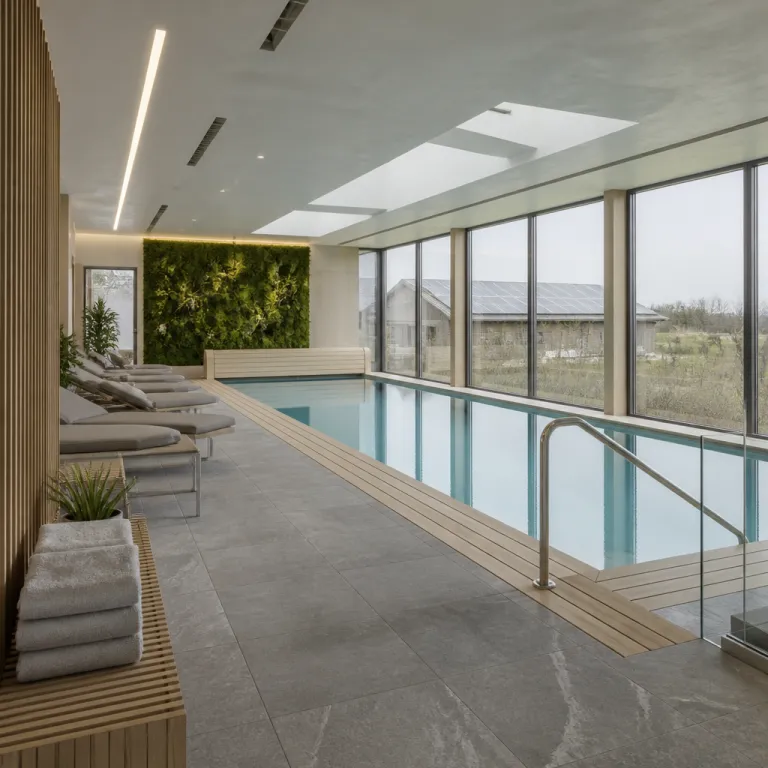
How hotel sustainability certification now shapes revenue for indoor pool properties
Eco-certified hotels are no longer a niche; they now sit at the centre of the hotel sustainability conversation and the premium indoor pool market. A new industry report on hotel sustainability certification revenue 2026 shows that eco-certified hotels achieve up to 24.5 percent higher booking share and up to 12 percent higher average daily rate, with sustainable properties also reporting 23 percent better occupancy than uncertified competitors. For a 150 room hotel running at 70 percent occupancy, that sustainability certification uplift translates into roughly 184 000 dollars in additional annual revenue from eco conscious travel tourism guests who actively seek visible environmental practices around the pool deck.
The dataset behind this certification market shift is clear and aligns with the Uniqode Sustainability in Hospitality report, which confirms a 24 percent increase in bookings for eco-certified hotels compared with conventional hotels. One core quote from the expert material captures the new reality without ambiguity ; "Eco-certified hotels see 24% more bookings". For indoor pool hotels, this means that sustainability basics such as efficient pool heating, low chemical water treatment, and transparent sustainability reporting have moved from optional environmental extras to key revenue drivers in a highly competitive global market.
Travelers who read sustainability reporting details now treat third party certification as a proxy for trust, especially when evaluating hotels with energy intensive indoor pools. They want to see a credible certification scheme, clear environmental social commitments, and proof that the hotel is certified by a recognised tourism council or similar body rather than relying on vague green language. This is where serious sustainability certifications, including Green Key Global and other global sustainability labels, become key certified signals that separate genuine sustainable tourism properties from those taking a risky approach to green positioning.
From greenwashing risk to green key advantage in pool focused hotels
The same hotel sustainability certification revenue 2026 analysis highlights a sharp rise in guest scepticism, with 67 percent of travelers reporting that they have encountered misleading environmental claims during hotel stays. For indoor pool hotels, where guests can literally feel the water temperature and smell the chemicals, any gap between sustainability certifications on paper and environmental practices in the pool area becomes a visible liability. This is why the certification market now rewards hotels that align their pool operations with strict environmental regulations, robust waste management systems, and transparent data management across the entire supply chain.
Green Key Global, often referred to simply as Green Key, has emerged as one of the most referenced sustainability certification options for hotels with complex leisure facilities such as indoor pools. Its standards require measurable environmental performance, from energy efficient pool ventilation to responsible water management, and these requirements are audited by an independent third party to reduce the risk of superficial party certification. When a hotel is Green Key certified, guests increasingly interpret that label as a shorthand for credible sustainability basics rather than marketing language, especially when they compare hotels on specialised guides to the greenest indoor pool hotels to book for filtration without chlorine and heat without waste.
For business leisure executives extending a work trip, the environmental profile of the indoor pool now sits alongside Wi Fi speed and room category when they choose a hotel. They are reading sustainability reporting sections, asking how the hotel manages waste management from poolside amenities, and checking whether the property aligns with tourism council guidance on sustainable tourism. In this context, hotels that invest in rigorous certifications, publish clear environmental social metrics, and align their management practices with global sustainability standards are seeing a direct uplift in both rate and occupancy, especially in urban markets where comparable non certified hotels compete on price alone.
Six key sustainability metrics that matter for indoor pool revenue
The hotel sustainability certification revenue 2026 findings distil the complex world of sustainability certifications into six key metrics that indoor pool hotels can track to protect and grow revenue. These metrics are paper reduction, energy per room per night, food waste diversion, local sourcing percentage, carbon per room night, and guest participation rate in sustainable tourism programmes. For pool properties, the most powerful gains often come from energy and carbon reductions linked to pool heating, smart ventilation, and precise data management of water treatment systems that meet strict environmental standards without compromising comfort.
Indoor pool hotels that treat these metrics as management tools rather than marketing talking points are building a durable advantage in the global certification market. They integrate sustainability basics into daily operations, from supply chain decisions on eco friendly pool textiles to environmental regulations compliance on chemical storage, and they use certification scheme audits to refine their practices year after year. When these hotels publish clear sustainability reporting, travelers can read concrete data instead of vague promises, which reinforces trust and supports higher rates during shoulder season stays where guests weigh a green certified pool experience against a cheaper but less transparent alternative.
For travelers using curated platforms focused on indoor pools, the shift is already visible in how hotels are presented and filtered. Guides now highlight which hotel is certified by a recognised tourism council, which properties hold multiple sustainability certifications, and how each hotel balances environmental performance with guest comfort in the pool area. As more eco-certified hotels prove that rigorous certification, strong environmental social governance, and thoughtful pool design can coexist with luxury, the market is rewarding those that align revenue strategy with credible global sustainability commitments rather than short term green claims.