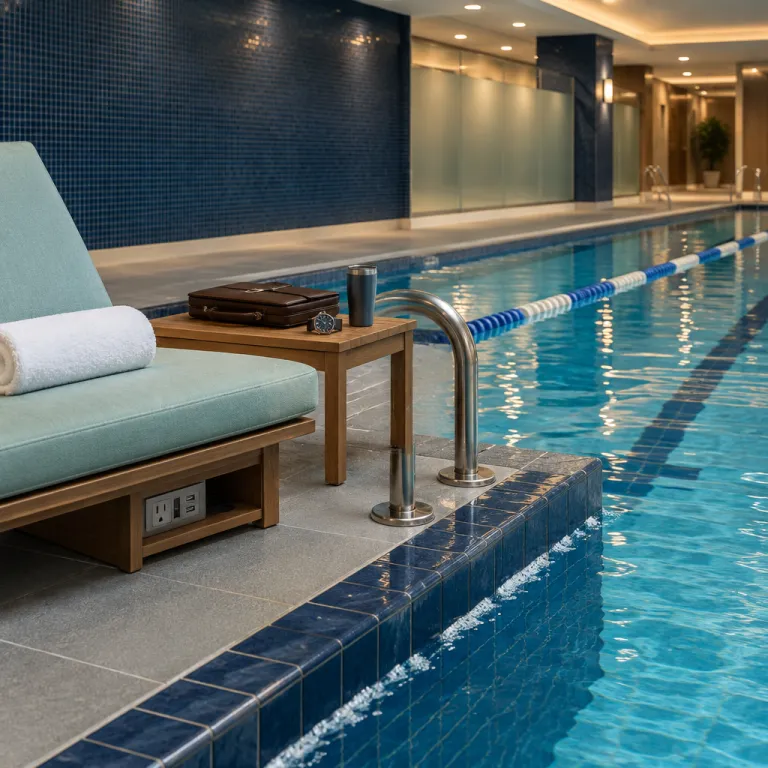
The five minute test for a hotel pool business travel experience
Business travelers rarely have time to wander the spa corridor and hesitate. They judge a hotel’s pool for business trips on how fast they can move from room to water and back to work. If you cannot complete that circuit in five minutes, the pool becomes aspirational décor rather than a practical part of your business trip.
When you book business hotels, study the floor plans or read guest comments about elevator proximity, pool level, and changing areas. The most efficient hotels for corporate travel place the pool either on the same level as key meeting rooms or one quick lift ride from the main rooms business wing, which shortens transition time during a packed business day. That layout matters more to a business traveler than a dramatic staircase or a distant spa annex that looks beautiful but wastes minutes.
Think through your own work rhythm before you start the booking process for any hotels business stay. If your business travel schedule is dense with early meetings, you want a hotel where you can leave your room at 6:10, swim at 6:15, and sit in a meeting at 7:00. That is the kind of streamlined pool access that earns real loyalty from frequent business travelers who treat the pool as non negotiable, not as a holiday extra.
Access logistics are just as critical as architecture for hotel guests who swim for fitness. You want clear pool signage, fast keycard access, and towels visible the moment you enter, not hidden in a spa reception cabinet. When a hotel forces guests to queue at the front desk to check pool hours or sign extra forms, the five minute test is already lost for serious business travelers.
Smart hotels design rooms and corridors with the swimmer’s route in mind, especially in dense New York City properties where space is tight. Look for hotels resorts that cluster rooms for business travelers on floors with direct access to wellness areas, rather than sending you through public lobbies in a robe. That subtle planning detail turns a rushed pre meeting swim into a calm, repeatable ritual that anchors your entire trip.
Personalized guest services around the pool for working travelers
For many business travelers, the most memorable hotel pool business travel experience is not the view but the service choreography. The best hotels anticipate that you arrive with a laptop, a phone full of meetings, and a loyalty card rather than a beach bag. They shape personalized guest services around that reality, turning the pool into a discreet extension of your work space.
High performing hotels business teams train their staff to recognize a business traveler by posture and timing, not just by room category. When you appear at the pool at 6:00 with a focused expression, staff should offer a lane suggestion, a towel, and a quiet lounger near a power outlet without unnecessary small talk. That level of intuitive service feels like a private concierge for your swim, and it is exactly the kind of refined hospitality highlighted in guides to personal concierge services in premium hotels.
Personalization also extends to how hotels manage access and booking for wellness spaces during peak business travel periods. Some business hotels now allow hotel guests to reserve lap lanes in advance through mobile apps, aligning swim times with meeting schedules and airport transfers. When a property remembers your preferred pool temperature or your habit of swimming on the last day of an extended stay, that data driven attention quietly reinforces loyalty without a single marketing email.
Loyalty programs can deepen this relationship when they move beyond points and late check out perks. A thoughtful loyalty program might guarantee early pool access for elite business travelers, or offer complimentary laundry for swimsuits during a long corporate travel assignment. Over time, those tailored gestures matter more than generic upgrades, because they respect how you actually travel and work.
Even large hotels resorts groups, from independent business hotels to global brands like Marriott Bonvoy properties, can differentiate through such precise service. When a front desk agent offers a printed lap schedule at booking check or suggests meeting rooms located near the pool for a wellness focused offsite, you feel that the entire hotel is aligned with your travel business priorities. That is when loyalty stops being a marketing slogan and becomes a lived, daily experience for guests who measure value in minutes saved rather than cocktails served.
Lane availability, water temperature, and the serious swim
For a frequent business traveler, a hotel pool business travel experience is closer to a training session than a holiday splash. You are not there to float under chandeliers; you are there to log laps, clear your head, and walk into the first meeting of the day with your thoughts aligned. That means lane availability at 6:00 or 21:00 matters more than any design flourish.
When you evaluate hotels for an upcoming business trip, look beyond generic photos of blue water and ask specific questions about lap lanes and schedules. Does the pool offer at least one dedicated lane during early morning hours, or is it shared with families and leisure travelers practicing slow breaststroke across the width of the pool? A 20 to 25 meter lane with clear markings and a predictable current will serve most business travelers far better than a dramatic but short plunge pool.
Temperature is another non negotiable factor for hotel guests who swim for fitness rather than relaxation. Many leisure focused hotels keep indoor pools at 28 to 30 degrees Celsius, which feels pleasant for a gentle float but sluggish for interval sets. Business travelers who swim hard usually prefer water in the 25 to 27 degree range, where the first length feels bracing but the tenth feels efficient.
Some hotels business teams now treat pool programming as seriously as meeting room scheduling, especially in properties that host recurring corporate travel accounts. They block specific hours for lap swimming, communicate them clearly at check in, and adjust lifeguard staffing to support that rhythm. When you can rely on a quiet lane every day of an extended stay, your loyalty to that property becomes almost automatic.
Outdoor pools can still play a role for business travelers, particularly in warm destinations where an early morning swim under the sky sharpens focus before a long work day. Yet for many urban hotels resorts, the indoor pool remains the only reliable year round option for a structured workout. The properties that calibrate length, depth, and temperature for serious swimmers, rather than just for photos, are the ones that earn repeat bookings from travelers who treat their training as part of their job.
Connectivity, quiet zones, and turning the pool into a work ally
Modern business travel blurs the line between work and wellness, and the smartest hotels design pools that respect that overlap. A strong hotel pool business travel experience lets you move from inbox to lane and back without friction or awkwardness. That requires more than Wi Fi; it demands thoughtful zoning, acoustics, and furniture.
Look for hotels where the pool deck includes a small cluster of tables with comfortable chairs, power outlets, and stable connectivity just beyond the splash zone. This allows business travelers to take a call between sets, review a presentation, or read briefing notes while cooling down, without disturbing hotel guests who are there purely to relax. When the pool becomes a quiet satellite office rather than a noisy echo chamber, it supports the entire rhythm of your trip.
Meeting rooms positioned near the wellness floor can also transform how you use the property during a dense business day. Imagine stepping out of a strategy session, walking thirty seconds to your room to change, and then slipping into the pool for a focused twenty minute swim before the next meeting. That kind of layout planning shows that the hotel understands travel business realities, not just leisure fantasies.
Mobile apps now play a subtle but important role in this ecosystem, especially in large business hotels that juggle many corporate travel groups. Through a well designed app, you can check pool occupancy in real time, reserve a lane, or adjust a wake up call to protect your morning swim window. When the digital layer supports your physical routine this precisely, your perception of the hotel’s overall efficiency rises sharply.
Some loyalty programs even experiment with wellness based rewards, such as guaranteed quiet zones by the pool or priority access during peak hours for top tier business travelers. While points and upgrades still matter, a reliable, interruption free swim before a crucial presentation often delivers more perceived value. Over multiple stays, that reliability becomes the quiet foundation of your loyalty to specific rooms, specific hotels, and even specific brands.
The loyalty equation: when a reliable pool defines your preferred hotels
Ask frequent business travelers about their favorite hotels, and many will mention the pool before the restaurant. A consistent hotel pool business travel experience becomes a private ritual that steadies you across time zones and client meetings. Once you find a property where the route from room to water is flawless, you start planning every future business trip around that stay.
For some road warriors, loyalty begins not with points but with the first perfect five minute circuit from bed to lane and back to the desk. You wake, check the clock, and know exactly how long it takes to reach the pool, swim your set, shower, and arrive at the meeting room with a clear head. That predictability is a form of emotional insurance that no standard loyalty program brochure can fully describe.
Brands that understand this dynamic, including several Marriott Bonvoy business hotels in major hubs like New York City, quietly engineer their properties around the swimmer’s path. They align room allocations, elevator banks, and wellness floors so that business travelers can maintain routines even during an extended stay far from home. Over time, those details generate higher loyalty and better retention than any short term promotion.
Corporate travel managers increasingly recognize that wellness infrastructure, including serious indoor pools, influences productivity and satisfaction for their teams on the road. When they negotiate contracts with hotels resorts, they now ask about lap lanes, early opening hours, and the ability to block rooms business close to the pool for key executives. In that context, the pool stops being a leisure extra and becomes a strategic asset in the travel business toolkit.
For individual guests, the message is simple yet powerful: treat the pool as a core criterion in every booking check, not as a pleasant surprise. When you consistently choose hotels where the pool supports your work, your health, and your schedule, each trip feels less draining and more intentional. Over a career of flights and meetings, that is the kind of loyalty that matters most, both to you and to the hotels that earn your trust.
FAQ
How do business travelers quickly evaluate a hotel pool on arrival?
Most business travelers run an informal five minute test as soon as they reach their room. They time how long it takes to walk from the room to the pool, check whether towels and lockers are immediately available, and note if there is a clear lap lane during early morning or late evening hours. If that circuit feels smooth and efficient, the pool usually becomes part of their daily routine for the rest of the stay.
What pool features matter most for a short business trip?
On a short business trip, the essentials are proximity, predictable hours, and a lane suitable for continuous swimming. Travelers look for a pool that opens early, offers at least one dedicated lap lane, and sits close to guest rooms or meeting rooms to minimize transition time. Design flourishes are appreciated, but they rarely compensate for a long walk, crowded water, or inconsistent schedules.
Should I prioritize indoor pools or outdoor pools for business travel?
Indoor pools are usually more reliable for business travel because they are not affected by weather and can maintain consistent hours year round. Outdoor pools can be excellent for early morning or evening swims in warm climates, but they often close during shoulder seasons or in poor conditions. If swimming is central to your routine, choose a hotel with a serious indoor pool first, then treat any outdoor option as a bonus.
How can I tell if a hotel pool will be suitable for lap swimming?
Before booking, look for clear photos that show lane markings, straight edges, and enough length for continuous laps, ideally around 20 to 25 meters. It also helps to read recent guest reviews that mention lap swimming, early morning use, or fitness focused amenities. If the hotel website is vague, contact the property directly and ask specific questions about length, depth, and dedicated lap times.
Do loyalty programs offer real benefits for frequent pool users?
Some loyalty programs now recognize that a reliable swim is a key part of the hotel experience for frequent business travelers. Benefits can include early or extended pool hours, priority access during busy times, or rooms located closer to wellness areas. While these perks are not always advertised prominently, it is worth asking the hotel or checking program details if the pool is central to your travel routine.