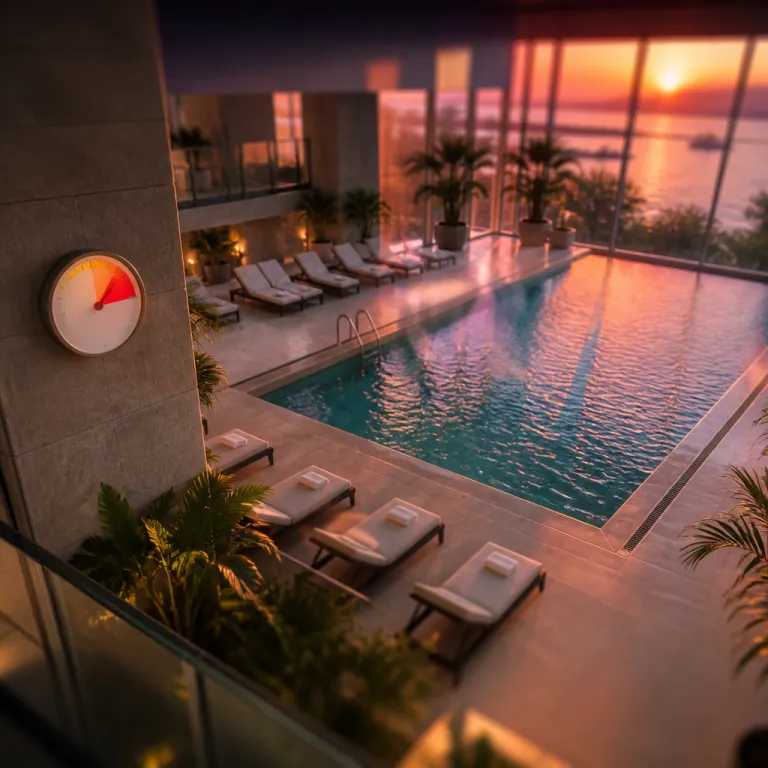
Why 28 degrees became the quiet obsession of luxury hotel pools
Walk into a truly refined indoor hotel pool and you feel it before you see it. The water temperature wraps around your shoulders at about 28 °C, a calibrated warmth that signals you are in a luxury hotel that takes swimmers seriously. That single number separates a perfunctory swimming pool from an indoor pool that feels like a private spa ritual and a carefully engineered wellness space.
Hotel management teams now treat hotel indoor pool temperature as a strategic decision, not a maintenance afterthought. They work with HVAC specialists and pool maintenance companies to balance guest comfort, structural protection and energy efficiency, using thermometers, dehumidifiers and increasingly smart natatorium HVAC systems to keep pool water and air temperature in a narrow, intentional band. In this world, the best hotel pools are not just about dramatic pool design or a glamorous pool bar, but about how the pool water feels on your skin at 6 a.m. when the room is silent.
Leisure swimming pools in high end hotels typically sit warmer than athletic facilities, which follow FINA guidance of roughly 25 to 28 °C for competitive swimming events.1 Luxury pools push closer to 28 to 30 °C, because guests are not chasing lap times, they are chasing ease, recovery and the ability to enjoy indoor swimming for longer without a chill. When you are booking a pool hotel or a large urban resort with multiple indoor pools, that subtle shift in water temperature is often the difference between a quick dip and a genuinely restorative session.
The invisible triangle: water, air and humidity in a pool room
Every memorable hotel indoor pool is built on a three way equilibrium between water temperature, air temperature and humidity. Industry practice, reflected in ASHRAE and specialist HVAC design manuals for natatoriums, has settled around 28 °C pool water, 30 °C air and roughly 50 to 60 % relative humidity, because this combination keeps guests comfortable while protecting the building.2 Engineers aim to keep the air just a couple of degrees warmer than the pool water so that swimmers stepping out of the swimming pool do not feel an evaporative chill on wet skin.
In a well tuned indoor hotel environment, you barely notice the air temperature at all. The pool room feels calm, your breathing is easy and there is no chemical tang or condensation streaking the windows, because dehumidifiers and smart HVAC systems are quietly holding humidity below about 60 %. When that balance slips, even a beautiful pool design can feel wrong, with fogged glass, cold draughts and guests cutting their swim short instead of lingering to enjoy the space.
Case study: how one city hotel manages its pool climate
A senior engineer at the Hilton Munich City describes their indoor pool as “a small climate project that never stops.” The main basin is held at 28 °C, the air at 30 °C and relative humidity near 55 %. Sensors feed data to a building management system every few minutes, and the team adjusts ventilation and dehumidification based on occupancy and outside weather. Internal tracking at comparable European business hotels suggests that this tight control can account for 5–10 % of the property’s total energy bill in winter, but management accepts the cost because guest reviews consistently praise the comfort of the pool room and spa.
For travelers who care about wellness technology, this is where hotel indoor pool water temperature luxury becomes a practical filter during booking. Before you confirm a room, check how the hotel describes its indoor pool, whether it mentions controlled pool temperature, a dedicated pool room ventilation system or an integrated spa circuit with hot tub and contrast showers. Properties featured in guides to long day indoor swims, such as curated lists of indoor pool hotels where the longest day looks different from the water, tend to highlight this engineering because it directly shapes how their hotel pools feel hour by hour.
How luxury hotels tune indoor pools for different kinds of swimmers
Not every guest wants the same pool temperature, and the best hotels acknowledge that. Solo lane swimmers often prefer a slightly cooler hotel pool, closer to 27 °C, because sustained indoor swimming generates heat and they want the water to carry some of that away. Leisure guests drifting between the swimming pools, the hot tub and the spa loungers usually gravitate toward 28 to 30 °C, where the water feels almost body warm.
Hotel management and maintenance staff adjust these nuances through daily monitoring and seasonal tweaks, using regular temperature checks and HVAC system adjustments to respond to changing occupancy and climate. In alpine resorts, for example, a pool indoor space might be kept warmer in winter so that guests stepping in from the snow feel an immediate cocoon, while an urban indoor hotel in a humid city will prioritize aggressive dehumidification to keep the pool room glass clear and the air temperature stable. This is where the quiet work of maintenance staff, guided by clear policies from hotel management, becomes central to the guest experience.
Some of the most thoughtful properties, from city towers to retreats comparable in ambition to Park Hyatt flagships, now differentiate zones within the same pool hotel. A main indoor pool might sit at 28 °C for mixed use, while a smaller indoor swimming lane is kept cooler for training and a hydrotherapy pool water circuit runs warmer for relaxation. When you are comparing hotels, look for this level of detail in descriptions of hotel pools and ask directly how they tune temperatures for different swimmers, especially if your stay revolves around structured laps rather than casual floating.
Quick reference: typical temperature and humidity targets
- Leisure indoor pools: water 28–30 °C; air about 1–2 °C warmer; relative humidity around 50–60 %. Comfortable for long, relaxed sessions but with higher heating and dehumidification costs.
- Training and lap pools: water 26–28 °C, in line with FINA-style competition ranges; air kept slightly warmer than the water; humidity controlled near 50–60 %. Better for performance swimming and marginally more energy efficient.
- Hydrotherapy and hot pools: water 32–38 °C; air temperature raised to reduce chill when exiting; humidity carefully managed to avoid condensation. Most energy intensive but central to spa-focused wellness experiences.
Wellness technology, contrast therapy and the new indoor pool spa circuit
Wellness focused travelers increasingly treat the indoor pool as the anchor of a broader thermal journey. In this context, hotel indoor pool water temperature luxury is not just about one perfect number, but about how the main pool interacts with a hot tub, cold plunge and steam or sauna sequence. A classic contrast therapy circuit might move from a 10 °C plunge to a 30 °C pool and then into a 40 °C hot tub, using temperature shifts to stimulate circulation and recovery.
Luxury hotels are weaving this thinking into pool design, installing digital controls that hold each element of the circuit at a precise temperature and integrating smart climate control so the overall pool room remains comfortable. Guests can enjoy a few lengths in the indoor pool, step into a hotter hydrotherapy corner, then cool down under a mist shower without ever feeling that the air temperature is fighting the experience. For solo explorers who plan trips around wellness, this kind of integrated spa and pool water choreography is often more compelling than a larger but generic swimming pool.
When you are booking, read beyond the headline of "heated indoor pools" and look for specific numbers, or at least clear descriptions of warm, mid range and cool zones. Properties that already think in these terms often also curate other high touch experiences, from skyline lap lanes in elevated city pools to suites with private plunge pools, as seen in specialist guides to high floor city swims from Tokyo to Manhattan. These are the hotels where temperature, light and acoustics are treated as a single design language, and where the indoor pool becomes a daily ritual rather than a one off amenity.
How to read between the lines when booking a temperature perfect indoor pool
Most booking engines still reduce the entire pool experience to a single amenity tick box. To find true hotel indoor pool water temperature luxury, you need to read more closely and ask better questions. Start by scanning the hotel description for explicit references to a heated indoor pool, controlled pool temperature or a dedicated spa level with its own pool room and thermal facilities.
Then move to guest reviews and look for comments about the water being too cold, too warm or "just right" for swimming laps. If you are planning a stay where the indoor pools are central, email the property and ask what temperature they maintain in the main hotel pool, whether the air temperature in the pool room is kept slightly warmer than the water and how they manage humidity. Simple questions about daily monitoring, seasonal adjustments and the role of maintenance staff will quickly reveal whether the hotel treats its swimming pools as a core part of the experience or as a decorative extra.
For trips built around wellness or romance, consider pairing a temperature focused indoor hotel stay with a suite that extends the aquatic experience, such as a room with a private plunge or direct access to a spa deck. Curated guides to romantic escapes, honeymoon suites with private pools and sea views, or editorial roundups of skyline lap pools can be a useful benchmark for how seriously a brand takes water, light and privacy. When a resort or city hotel speaks fluently about pool design, pool bar ambience and the feel of the water at different times of day, you are usually in safe hands.
What hotel insiders know: maintenance, energy and the cost of perfect water
Behind every serene indoor pool is a set of hard choices about energy, maintenance and long term infrastructure. Keeping a large volume of pool water at 28 °C, holding the air temperature a touch higher and maintaining humidity around 50 to 60 % is expensive, especially in climates that swing between extremes. Industry case studies of hotel natatorium HVAC systems suggest that indoor pool operations can consume several hundred kilowatt hours per square metre of water surface annually, depending on climate and usage patterns.3 That is why hotel management teams now frame temperature regulation as a continuous event, with daily monitoring and seasonal recalibration rather than a one time setup.
From an engineering perspective, the goals are clear: enhance guest comfort, protect the building fabric from condensation damage and reduce operational costs through efficient systems. Integration of smart climate control allows maintenance staff to track pool temperature, air temperature and humidity in real time, adjusting HVAC settings before guests even notice a shift. This is where the partnership between hotel management, HVAC specialists and pool maintenance companies becomes visible in the lived experience of swimmers and spa guests.
For travelers, the practical takeaway is simple enough to act on. "Why is 28 °C ideal for indoor pools?" Because it balances comfort and energy efficiency for most swimmers. "How does air temperature affect pool conditions?" Warmer air reduces evaporative cooling and helps stabilize humidity. "What role does humidity play in pool environments?" Proper humidity control, in line with ASHRAE-style recommendations around 50 to 60 %, prevents condensation and structural damage. When a property can answer these questions clearly, you are usually looking at a hotel that treats its indoor pools as a long term asset rather than a short term marketing image.
FAQ
Why do so many luxury hotels aim for 28 °C in their indoor pools?
Luxury properties target around 28 °C because it feels warm enough for relaxed swimming yet cool enough for exercise without overheating. This pool temperature also aligns with energy efficient operation and reduces stress on HVAC systems. It has become the quiet standard for hotel indoor pool water temperature luxury worldwide.
How can I check the water temperature before I book a hotel?
Most booking sites do not list exact water temperature, so you need to ask directly. Email or call the hotel and request the typical temperature of the main indoor pool and any hot tub or hydrotherapy pools. Serious pool hotels will have this data on hand and will usually share details about their pool room climate control as well.
What is the ideal air temperature around an indoor swimming pool?
Engineers generally keep the air temperature one to two degrees warmer than the pool water, often around 30 °C when the water is at 28 °C. This prevents guests from feeling chilled when they leave the water and helps control evaporation. In a well designed indoor hotel pool room, you should barely notice the air at all.
Why does humidity matter so much in an indoor pool room?
High humidity makes the space feel heavy and can cause condensation on windows, corrosion of fixtures and long term structural damage. Keeping relative humidity near 50 to 60 % protects the building and keeps guests comfortable, especially during longer spa sessions. Hotels that invest in strong dehumidification usually deliver a noticeably better pool experience.
Are hotel leisure pools warmer than competitive swimming pools?
Yes, leisure focused hotel pools are typically warmer than competitive facilities. Athletic pools often sit between 25 and 28 °C to support intense training, while luxury hotels push closer to 28 to 30 °C for comfort. If you prefer cooler water for serious laps, ask whether the property offers a dedicated training lane or a slightly cooler indoor pool option.